


Wasteland Life: Survival Idle
3.96.89K Reviews
App Specs
- Version
- 3.1.2
- Updated On
- License
- Free
- Downloads
- 10,000,000+
- Developer
- SayGames Ltd
- Categories
- Role Playing
- Platform
- Android, iOS
Screenshots
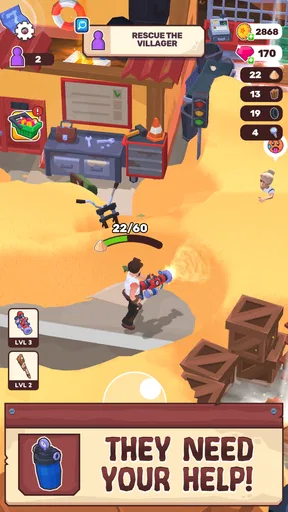
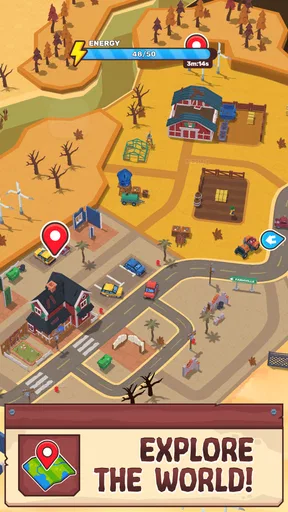
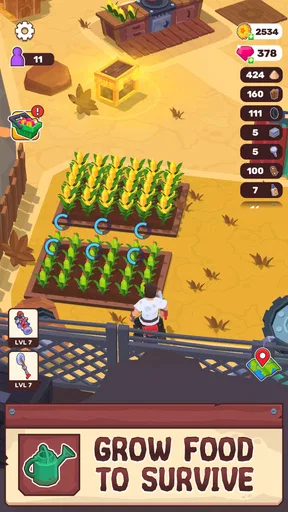
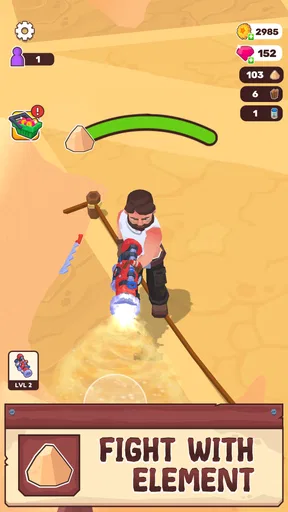
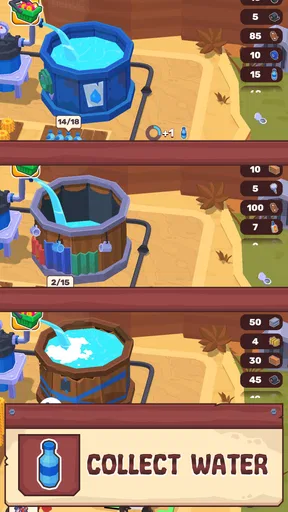
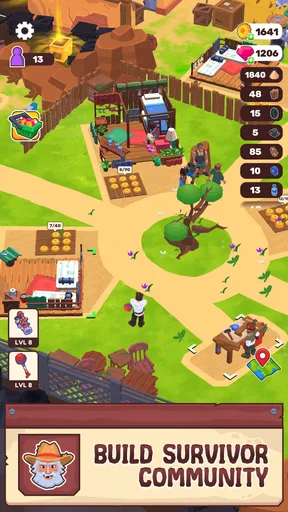
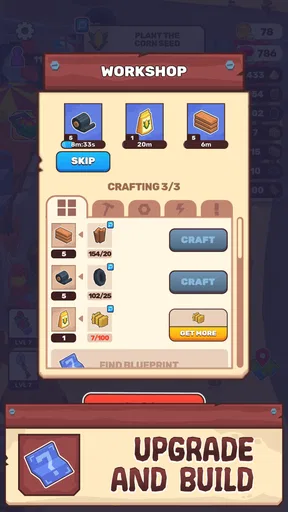
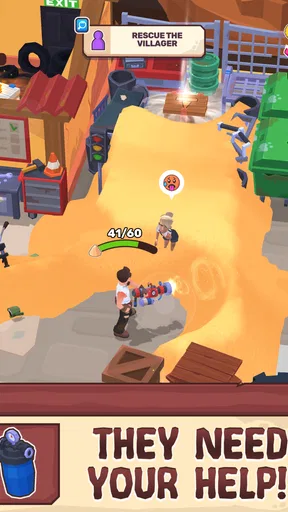
 Analysis by AppCompare
I like survival games most when their core decision is clear: do I spend my limited attention planning a settlement, or do I want to control every moment of staying alive? Wasteland Life: Survival Idle leans toward the first choice. It is a role-playing game from SayGames Ltd that puts a ruined world and the work of building a place in it at the center, while its idle approach makes it easier to dip in and out than a demanding real-time survival game.
That distinction matters before you install it. If I have a short break, I can check progress and think about what to do next rather than expecting a long session of constant input. If I want precise combat, deep character role-play, or a survival simulation where every action needs immediate attention, I would look elsewhere. This is most appealing when the satisfaction comes from gradual progress and choosing how to use resources, not from mastering fast controls.
A survival game for short sessions
The basic appeal is easy to understand: the wasteland gives you a reason to gather, make things, and establish a settlement, while the idle structure leaves room for everyday interruptions. I would consider it for a commute, a quiet moment between tasks, or a relaxed evening when I want a game I can check without committing to a long stretch. The useful question is whether you enjoy returning to see how a plan has gone; if you prefer to be hands-on throughout, the central rhythm may feel too passive.
Its role-playing label also sets expectations. This is not simply a conventional action game with a ruined setting: the draw is the ongoing survival journey and the decisions around building and managing a home. The post-apocalyptic theme gives those chores a clear purpose, but it does not automatically make the game a fit for every fan of the genre. I would choose it for a lighter, more stop-and-start take on survival, rather than as a substitute for a sprawling role-playing adventure.
Where it stands out, and where it may not
The strongest reason to choose it over a typical hands-on survival game is convenience. I do not need to treat every session like a test of reflexes or set aside a long uninterrupted block simply to make progress. The trade-off is that idle play can make success feel less immediate: if I want to personally perform every task and see a direct response to each move, a more active survival game is likely a better match.
It also occupies a different lane from settlement builders focused mainly on layout and expansion. Here, the survival framing gives the work a harsher, more personal context, while the role-playing angle points toward a continuing journey rather than a pure construction sandbox. I would compare it by asking what I want to do most: check in on a wasteland run, carefully design a town, or actively explore and fight. The first answer makes this game easier to recommend; the other two may point to another category.
What to know before committing
The game is free to download, with in-app purchases ranging from $0.99 to $99.99 per item. That wide range is worth keeping in mind if you are sensitive to optional spending: I would start without buying anything and see whether the normal pace feels comfortable before deciding if a purchase adds enough value for you. The game is rated Everyone 10+, so parents should still check whether its survival themes suit the player they have in mind.
Worth Reading Before You Choose

Flipboard Shows What News Apps Must Do Beyond the Feed

Switching to Android Auto Means Rethinking Your Driving Routine

Google Calendar Makes a Crowded Week Easier to Manage

Ludo King Makes the Most of the Minutes Between Plans

Baby Panda World Brings Quick Play to Modern Phones, but Its Game Library Feels Busy

ESPN’s Live Game View Makes Following Close Games Easier
It has an average rating of 4.0 from around 71,000 ratings, and more than 10 million installs. Those figures suggest that it has found a sizable audience, but they cannot tell me whether its particular balance of idle pacing and survival management will suit you. It was released on November 21, 2023, and version 2.8.1 requires Android 8.0 or later. I would check that requirement before downloading, especially on an older device.
Getting Started in the Wasteland
First things first, Wasteland Life: Survival Idle welcomes you with a beautifully chaotic world. You start with nothing but the clothes on your back and a hunger bar that's ticking down faster than I’d like. The tutorial is short and sweet, teaching you the basics without holding your hand too much. It’s like being thrown into the deep end, but in a good way!
The game is an idle survival experience, which means you don’t have to be glued to your phone all the time. You set your character off to gather resources, craft weapons, and build shelter, then come back later to see what they've accomplished. It’s perfect for those who love a bit of strategic planning but can’t always dedicate hours at a stretch.
The Art of Survival
Survival isn't just about collecting resources, though. You have to manage your character’s health, hunger, and even sanity. Yes, you read that right—sanity! As you explore the wasteland, you’ll encounter all sorts of characters and challenges.
One of the coolest aspects is the crafting system. You can build everything from a simple campfire to complex tools and weapons. The inventory management is intuitive, which is a lifesaver when you're juggling between crafting and scavenging.
The graphics are surprisingly good for an idle game. The gritty, desolate landscapes are detailed and immersive, drawing you into the world of Wasteland Life. Plus, the sound effects and background music add an extra layer of tension that keeps you on your toes.
Challenges and Rewards
What’s a survival game without a few challenges, right? Wasteland Life: Survival Idle throws random events your way, like sudden dust storms or raider attacks, which keeps things exciting. Sometimes, you might find yourself making tough decisions on whether to help a fellow survivor or go solo. Each choice affects your journey, and there’s a real sense of satisfaction when you overcome these hurdles.
The rewards are worth it, though. Successfully navigating these challenges earns you valuable resources and sometimes rare items, making your survival journey a bit easier. The game also offers daily rewards, kind of like a little pat on the back for sticking it out.
Final Thoughts
All in all, Wasteland Life: Survival Idle is a fantastic game for anyone who loves a good survival challenge without the constant need to be active. It’s got the right mix of strategy, adventure, and idle gameplay. Whether you’re a casual gamer or a hardcore survivalist, there's something in it for you.
So, if you're up for the challenge and ready to face the wasteland, give it a go. Who knows, you might just become the ultimate survivor!
Making progress without turning play into a chore
My practical advice is to treat each visit as a small planning cycle rather than a checklist. Before sending your character off again, look at the immediate pressure points: whether basic needs are being managed, what resource is holding back the next useful craft, and whether the shelter or tools need attention. That keeps short sessions purposeful. It also avoids the common idle-game trap of tapping through every available action without deciding what actually helps the next stage.
A realistic routine might be checking in during a lunch break, setting up a gathering or crafting goal, then returning after work to see what changed. I would not expect every brief visit to deliver a dramatic breakthrough; the pleasure is in accumulating enough progress to make the next decision easier. If the game’s pace feels slow, focus on one bottleneck at a time instead of trying to advance every aspect of survival at once.
There is a useful trade-off in how I would approach resources. Spending materials immediately on the first appealing item can feel rewarding, but keeping a small reserve gives more flexibility when a need or event changes priorities. I would pause before crafting something merely because I can: ask whether it helps survival now, opens a practical next step, or is simply a nice extra. That habit makes the management side feel more considered without requiring a spreadsheet or a long session.
Who is likely to enjoy the rhythm
I would recommend it most to players who like watching a settlement and a survivor’s situation develop over time, and who are happy to make progress in intervals. It can suit someone who enjoys crafting and resource decisions but does not want every play session to demand sustained attention. The changing pressures described in the game’s survival setup also offer more variety than a builder where the only meaningful question is where to place the next structure.
I would be more cautious recommending it to anyone who dislikes waiting or wants complete control over moment-to-moment action. “Idle” is not just a convenience label here; it shapes the feel of the experience. If the most enjoyable part of survival games for you is personally navigating every encounter, reacting instantly, and controlling exploration continuously, a hands-on action survival title will probably give you more of what you want.
It may also be a poor fit if you mainly want an open-ended city-design tool. Building is part of the appeal, but the wasteland survival premise means the broader experience is not just about arranging a pretty town. Conversely, players who find conventional survival games exhausting may appreciate a more approachable rhythm, though the needs and hazards still give the setting some pressure. I see that balance as the game’s defining compromise, not a flaw that can be fixed for every player.
How to judge the first sessions
Rather than deciding from the opening moments alone, I would give the early loop enough time to show whether its repeated cycle feels satisfying: prepare, send your character into the work of surviving, then return to make the next choice. Notice whether you enjoy planning around hunger and health, whether crafting feels like meaningful progress, and whether the interruptions from events add tension or simply feel like another demand. Those reactions are more useful than judging the game by its theme or graphics alone.
If you are installing it on a device that is close to the minimum operating-system requirement, check compatibility before making room for it. On a supported Android device, I would still start with modest expectations for session length: this is designed around coming back, not necessarily sitting down for an entire evening of uninterrupted action. That makes it convenient for casual play, but it also means a player seeking a long, tightly directed story may find the loop less compelling.
The game’s free entry makes trying that loop straightforward, but the purchase range is a reason to be deliberate rather than impulsive. I would decide whether the ordinary pace works for me first, then set a personal spending limit if I choose to buy anything. That is especially sensible in a game built around ongoing progress, where impatience can make optional purchases feel tempting even when the basic experience is still being evaluated.
Choosing between this and another kind of game
Compared with an action-focused survival game, this one makes convenience and gradual management more central than constant direct control. Compared with a traditional city builder, its appeal is less about treating the settlement as a design project in isolation and more about placing construction within a harsh survival journey. And compared with a story-led role-playing game, I would approach it for its recurring practical decisions, not primarily for a carefully paced narrative. These are differences in emphasis, so the better choice depends on what you want to do with your playtime.
One question I would ask myself before installing is whether I enjoy checking on progress after time away. If yes, the idle structure can make the game fit around a busy day. If I want a game that rewards fast reactions every time I pick up my phone, it is not the natural choice. Another is whether resource management feels satisfying or tedious to me: the former makes gathering and crafting a useful backbone, while the latter can make the survival chores feel like friction.
I would also consider how much uncertainty I enjoy. Events and decisions can make the journey feel less routine, but they mean the experience is not simply a calm construction sandbox. Players who want predictable, purely decorative building may prefer a different style of game. Those who like a little pressure attached to making a home in an inhospitable setting are more likely to find the premise engaging.
A measured recommendation
My recommendation is to try it if you want a post-apocalyptic role-playing game that lets you balance survival tasks and settlement progress around short visits. It has a clear identity in the space between active survival adventures and quieter management games, and that middle ground is exactly why I can see it fitting into an everyday routine. I would keep an eye on whether the idle pacing continues to feel relaxing rather than repetitive, because that is the question most likely to decide whether it becomes a regular game for you.
I would skip it if you need precise, continuous control, a city builder centered on elaborate layout, or a story-driven role-playing game as your main attraction. For everyone else, the best way to decide is to focus on the loop rather than the apocalypse setting: do you enjoy making a few practical choices, leaving the survivor to work, and returning to adapt? If that sounds satisfying, this is an easy one to sample; if it sounds like waiting between chores, another survival style will be a better use of your time.
Pros
- Engaging idle gameplay keeps you entertained.
- Unique post-apocalyptic theme and setting.
- Simple controls make it easy to pick up.
- Regular updates with new content.
- Offline play available for convenience.
Cons
- In-app purchases can be pricey.
- Graphics may seem basic to some players.
- Requires patience for resource collection.
- Limited social interaction features.
- Occasional ads can disrupt gameplay.
FAQs for Wasteland Life: Survival Idle
What is Wasteland Life: Survival Idle about?
Wasteland Life: Survival Idle is a post-apocalyptic survival game where players must navigate a desolate world. The game focuses on resource management, crafting, and strategic decision-making to survive. Players must gather supplies, build shelters, and fend off threats to ensure their survival in a harsh environment.
How does the idle gameplay work in Wasteland Life: Survival Idle?
The game incorporates idle mechanics, allowing your character to continue gathering resources and completing tasks even when you're not actively playing. This feature ensures that you make progress without constant interaction, making it ideal for players who enjoy a more relaxed gaming experience while still strategizing effectively.
Are there any in-game purchases in Wasteland Life: Survival Idle?
Yes, Wasteland Life: Survival Idle offers in-game purchases. These typically include resources, upgrades, and cosmetic items that can enhance gameplay. While the game is free to download and play, these purchases can accelerate progress and provide convenience, though they are not mandatory for enjoying the core experience.
What platforms is Wasteland Life: Survival Idle available on?
Wasteland Life: Survival Idle is available for both Android and iOS devices. This ensures a wide range of players can enjoy the game across different smartphones and tablets. Players can download the game from the Google Play Store for Android devices or the Apple App Store for iOS devices.
How does multiplayer work in Wasteland Life: Survival Idle?
While primarily a single-player experience, Wasteland Life: Survival Idle includes multiplayer features such as leaderboards and cooperative events. Players can compete with friends and other players globally, sharing strategies and achievements, which adds a social element to the otherwise solitary survival journey.


